
So, here we are again, with headlines meant to make you think we should all be ducking for cover from a tiny asteroid. Of course, it’s not about the asteroid – it’s about keeping you distracted while the real players get their hands dirty. Let’s not pretend for a second that the feds, and all the other alphabet soup agencies, aren’t working overtime to protect their own interests. And if you think this has nothing to do with the curly-headed Zionist puppet masters like Adam Sandler – oh sorry, Benjamin Netanyahu – pulling the strings, you might want to dig a little deeper.
But here’s the kicker: my opinions, my voice? Suppressed. Yahoo News doesn’t like it when someone dares to challenge the narrative. It’s one thing to be denied a platform, but to silence dissent entirely? Oh, that free speech is going to cost them – not so “free” anymore, is it? Maybe it has something to do with the fact that their CEO probably has ties to Epstein. Just a guess, but an educated one. The whole lot of them? Sickos, hiding behind their screens and “news.”
Correct me if I’m wrong, but this is the game they’re playing, and we’re all just supposed to sit quietly while they pull the strings? Not happening.
BREAKDOWN
(Above link goes to the original content created by MSN. By the way, found on the homepage of Edge Browser.)
Let’s break down the article piece by piece and analyze how the language used can be misleading and fear-based, despite the overall lack of danger posed by the event. Let me act as a mockingbird too! I want to join. But, for this event, it will be my pleasure to point out exactly how they sell fear to us.
Original Article Breakdown and Rewritten Analysis
Original Statement:
“The Earth will be hit by a tiny asteroid today, astronomers have said.”
Analysis:
This opening statement is designed to grab attention by stating that Earth will be “hit” by an asteroid. The word “hit” is emotionally charged and implies danger, which could cause unnecessary alarm in readers.
Rewritten:
“A small asteroid is expected to enter Earth’s atmosphere today, astronomers have noted.”
Original Statement:
“But the tiny asteroid – which is roughly one metre in size – will burn up in the atmosphere as it arrives.”
Analysis:
The follow-up sentence downplays the danger, but the initial fear has already been established. The article could have led with the information that the asteroid poses no threat, but instead, it creates a sense of relief after the fear has been invoked.
Rewritten:
“Fortunately, the asteroid, measuring about one meter in size, is expected to disintegrate in the atmosphere upon entry.”
Original Statement:
“That means it should pose no risk to anyone on the ground. But it should provide them with a show: the asteroid may be visible as a fireball as it burns up in the sky.”
Analysis:
While this statement clarifies that there’s no risk, the phrase “it should pose no risk” is tentative, leaving a sliver of doubt in the reader’s mind. Additionally, the emphasis on the potential “fireball” spectacle shifts focus from the lack of danger to the sensational aspect.
Rewritten:
“There is no risk to people on the ground, as the asteroid will completely burn up. However, it might create a brief and harmless fireball in the sky.”
Original Statement:
“The object was found only this morning, by the Catalina Sky Survey. It shared images of the object as it flew towards Earth.”
Analysis:
The mention that the asteroid was “only” found this morning might suggest a lack of preparedness or the potential for unexpected dangers. This can create unease about our ability to detect such objects in time.
Rewritten:
“The Catalina Sky Survey detected the asteroid earlier today and has since shared images of it as it approaches Earth.”
Original Statement:
“It is just the ninth time that we have spotted an asteroid before it hit the Earth.”
Analysis:
This fact might be presented to suggest that we are often unaware of incoming asteroids, which can invoke a sense of insecurity about space monitoring efforts.
Rewritten:
“This marks only the ninth instance where astronomers have detected an asteroid before it made contact with Earth’s atmosphere.”
Original Statement:
“It has been given the name 2024 RW1. It had previously been referred to as CAQTDL2.”
Analysis:
While this information is factual, it is somewhat irrelevant to the audience’s concerns and seems like filler content meant to maintain the suspense built up earlier.
Rewritten:
“The asteroid, now officially named 2024 RW1, was previously identified by its catalog number CAQTDL2.”
Original Statement:
“It will arrive at around 17.08 UTC, or 6.08pm UK time, on Wednesday, 4 September, astronomers have said. It will land in the Philippines, near Luzon Island.”
Analysis:
The word “land” is misleading because it suggests that the asteroid will strike the ground, which contradicts the earlier statements about it burning up. This choice of language could cause unnecessary fear, especially for those in the Philippines.
Rewritten:
“Astronomers have calculated that the asteroid will enter the Earth’s atmosphere near Luzon Island in the Philippines at approximately 17.08 UTC (6.08pm UK time) on Wednesday, 4 September.”
Original Statement:
“The European Space Agency was able to provide a fairly detailed estimate of where the object will impact.”
Analysis:
The use of “impact” again suggests a collision with Earth, which contradicts the assertion that the asteroid will burn up in the atmosphere. This could mislead readers into thinking there’s a potential for damage.
Rewritten:
“The European Space Agency has provided detailed estimates of where the asteroid will enter the atmosphere.”
Original Statement:
“But it also warned that the nearby tropical storm might make it difficult to see the fireball.”
Analysis:
This statement introduces a new potential issue—the tropical storm—further heightening the sense of uncertainty, even though it’s unrelated to the asteroid’s actual risk.
Rewritten:
“However, a nearby tropical storm may obscure visibility of the brief fireball in the sky.”
Original Statement:
“Earth is hit by objects from space fairly frequently, and almost all of them are too small to make it through the atmosphere and pose any danger. Because they are so small, it is difficult and rare to see them in advance, however.”
Analysis:
This paragraph adds context but again subtly reintroduces the idea that there could be unexpected dangers from space, which might not always be detected.
Rewritten:
“Small objects from space enter Earth’s atmosphere quite frequently, but they almost always burn up before reaching the surface, posing no danger. Due to their small size, these objects are often difficult to detect in advance.”
Original Statement:
“Some impacts do cause significant damage. Perhaps the most dramatic of recent times was the Chelyabinsk meteor, which fell to Earth over Russia in 2013, injuring around 1,500 people, damaging thousands of buildings and causing tens of millions of dollars in damage.”
Analysis:
Introducing the Chelyabinsk meteor here is a classic example of fear-mongering by drawing a comparison to a past event that had significant consequences, even though the current situation is not comparable.
Rewritten:
“While most small objects burn up harmlessly, there have been rare instances, such as the 2013 Chelyabinsk meteor, where a larger object caused damage.”
Original Statement:
“Space agencies have been working to protect Earth from the danger that a larger object could present if it came towards the Earth, including testing spacecraft that could be used to shove it off course. But Nasa’s simulations have sometimes suggested that the Earth would not be safe from such a collision.”
Analysis:
This paragraph transitions from discussing a harmless event to evoking fear about a potential future catastrophe, heightening anxiety about scenarios that are extremely unlikely.
Rewritten:
“Space agencies like NASA continue to develop strategies to protect Earth from larger objects, testing technologies that could redirect potential threats.”
Conclusion
This article uses charged language and selective comparisons to evoke fear and uncertainty about a situation that is, in reality, harmless. By restructuring the sentences to focus on the factual safety of the event and removing unnecessary references to past catastrophes, we can present a more accurate and reassuring narrative to the readers.
Source:
Asteroid will strike Earth later today, astronomers say – but it should be fine (msn.com) – https://www.msn.com/en-us/news/technology/asteroid-will-strike-earth-later-today-astronomers-say-but-it-should-be-fine/ar-AA1pZrP4?ocid=windirect&cvid=0866cef7cef648d6abc5d643fa4f8221&ei=12
As you can see, ai can do some powerful stuff. Including, make life easier to break down subjects. Not everyone is an “expert” in things, but, ai definitely is. And, with that, I strongly urge people to take advantage of the data that is available on those platforms. However, you do you boo boo.
And with that, I will leave you with this:
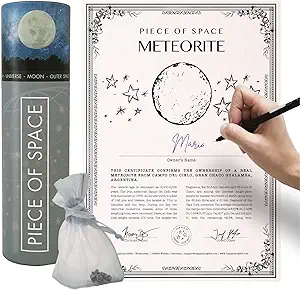
Today, I would like to show you some interesting stuff that I have had friends buy in the past. These little “Piece of Space” items are an awesome find on Amazon. Below, I have posted a link to where you can check them out, or, even purchase your very own. They are high quality conversation pieces, that will open up an entire world of intellectual conversations. How about getting one? Just one, out of the many readers, will help my family tremendously. Did I mention, I have five rambunctious kids. Not to mention animals. Your contribution will help me buy the coffee needed to keep up. Just sayin’.
 Plot🫀Pulse | Short Stories & Blog
Leave a comment