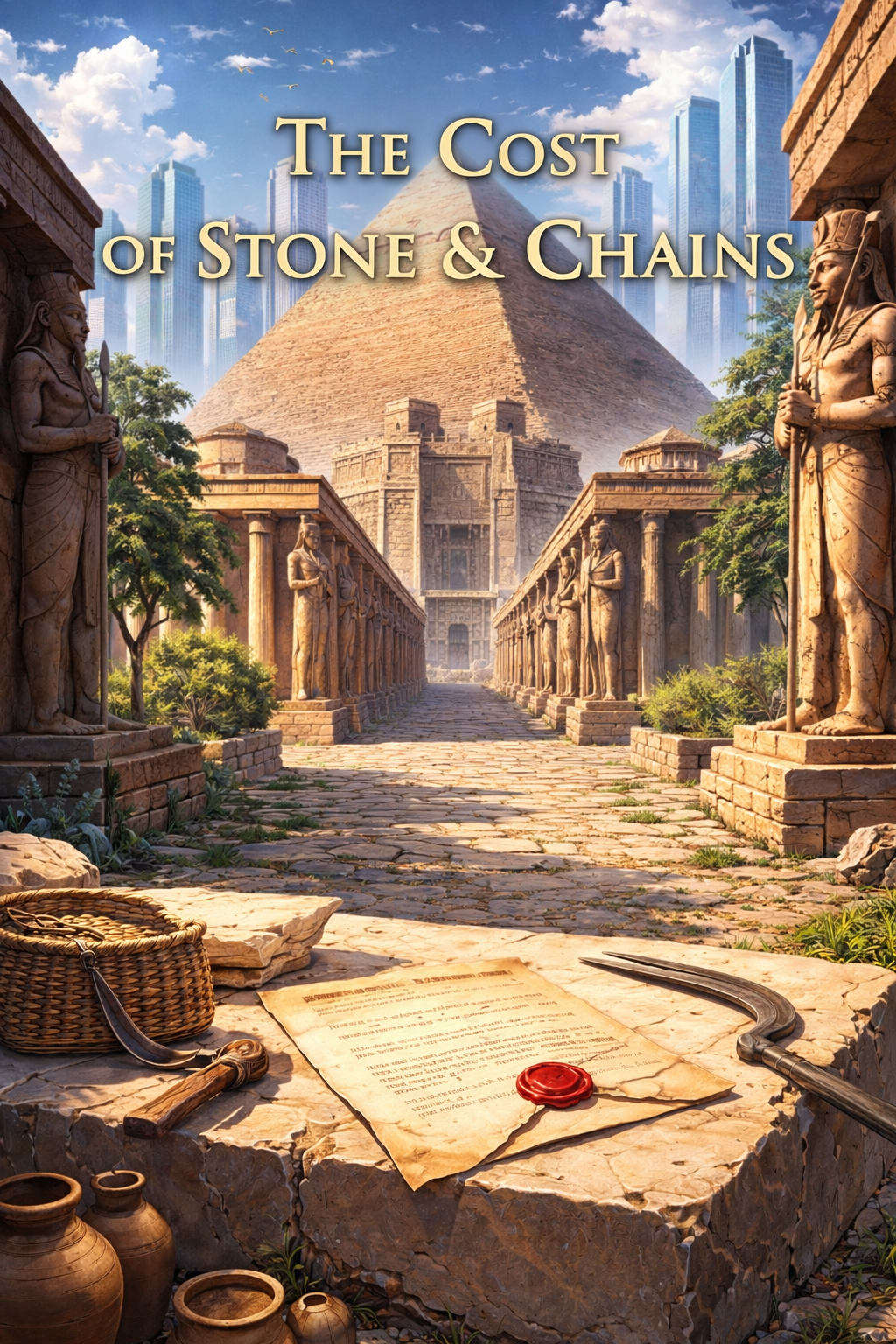
In the Old Kingdom, a child was not given to the Pharaoh by force.
They were paid for.
Families who lived beyond the floodplain—hunters, quarry hands, farmers whose backs bent before their prayers—understood the exchange. A parent could not simply surrender a child. They had to prove worth. Years of labor. Knowledge of stone. The handling of animals. The patience of soil.
Only then would the scribes write their names.
The payment was not gold. Gold stayed with the gods.
The payment was access.
The child would eat every day.
The child would sleep beneath stone instead of reeds.
The child would belong to Pharaoh—and therefore, to history.
They were called Noble Servants.
Their huts stood closer to the temples than the common poor. Their rations were measured. Their bodies trained. They built monuments that outlived dynasties, and in return, their families were spared famine.
The children did not scream.
They were raised to believe they had been chosen.
Thousands of years later, the language changed.
No Pharaoh. No scribe.
Just contracts.
Parents still paid.
They paid with degrees, with debt, with generations of labor already spent. They proved experience through résumés instead of scars. They signed their children into systems that promised stability, housing, healthcare, structure.
Opportunity.
The buildings were better now. Climate-controlled. Reinforced concrete. No whips. Just schedules. Metrics. Surveillance disguised as safety.
The descendants of the Noble Servants lived inside these structures. They called them campuses. Facilities. Work-communities.
They did not own land.
They did not choose their labor.
They were fed, housed, and praised for productivity.
Their lives were better than huts.
That was the justification.
Sometimes a child would ask why their family never left.
The answer was always the same:
“Because this is better than what came before.”
No one mentioned that freedom had once existed between the huts and the temples.
No one remembered that the pyramids were not built by chains—but by people who had been convinced survival was nobility.
And somewhere beneath the oldest stones, buried deeper than gold, was the first contract ever written:
Work for us, and you may live.
Leave a Reply